
The Australian men’s cricket team vs Pakistan national cricket team match scorecard told the story of a game that looked balanced at halfway but slowly slipped away from Australia in the chase. Pakistan made 168/8 in 20 overs at Gaddafi Stadium, Lahore, before restricting Australia to 146/8 and taking a 1-0 lead in the three-match T20I series.
This was not a match won by one huge innings. Pakistan’s victory came through useful batting phases, pressure through spin, and a controlled defence after Australia failed to build one decisive partnership. Adam Zampa kept Australia in the contest with four wickets, but Pakistan’s bowlers answered better under lights.
Match Scorecard Summary
Pakistan batted first after captain Salman Agha won the toss. The innings did not become a 190-plus total, but 168/8 was still competitive on a surface where stroke-making became harder once the ball gripped.
Australia’s chase never fully opened up. They reached 146/8 in 20 overs, finishing 22 runs short. The result gave Pakistan early control of the series and left Australia with several questions about batting depth, rhythm and adaptation.
| Team | Score | Overs | Result |
| Pakistan | 168/8 | 20 | Won by 22 runs |
| Australia | 146/8 | 20 | Lost chase |
The scorecard shows the shape of the match clearly. Pakistan did not dominate every over, but they won enough small phases. Australia had wickets in hand at moments, yet the required rate kept growing because boundaries dried up.
Pakistan Innings: 168/8 Built Around Useful Contributions
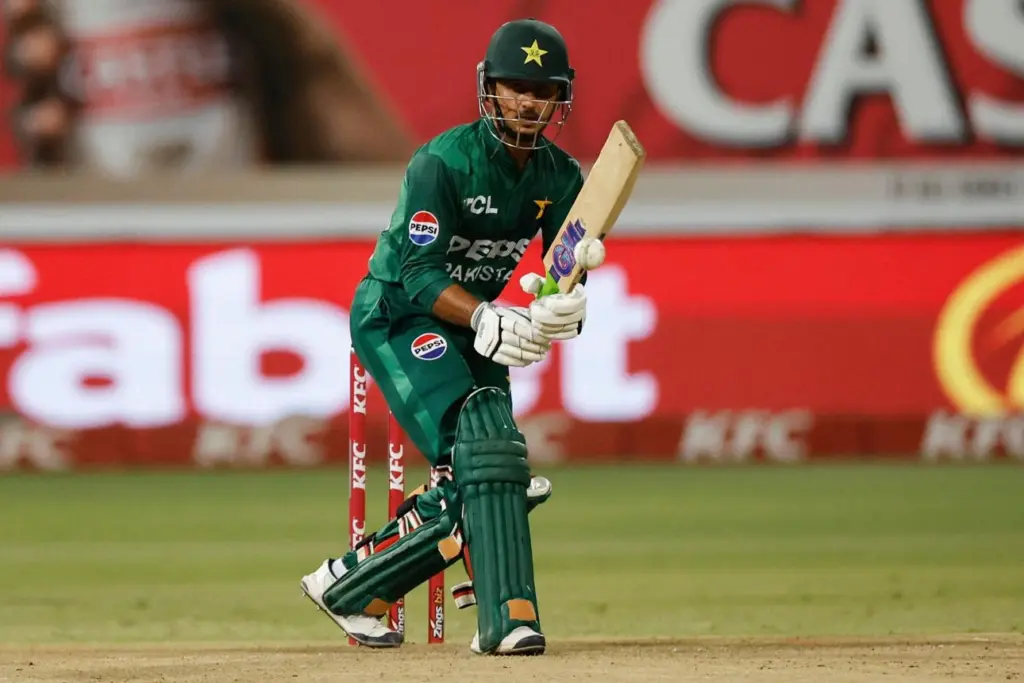
Pakistan’s innings started with early pressure, but Saim Ayub and Salman Agha gave the side enough direction. Saim’s 40 off 22 balls was the most important batting burst because it gave Pakistan pace in the first half of the innings. Salman Agha’s 39 added control and prevented the innings from falling apart too early.
Babar Azam, Fakhar Zaman, Usman Khan, Shadab Khan and Mohammad Nawaz formed the middle order around them, but Pakistan could not convert a decent platform into a massive finish. Australia pulled the innings back through Adam Zampa, who used his variations well and forced batters to take risks.
Pakistan’s 168/8 was not a perfect batting card. It was more of a workable T20 total: enough to defend if the bowlers struck early and kept Australia away from a clean powerplay.
Adam Zampa’s Four-Wicket Spell Kept Australia Alive

Adam Zampa was Australia’s standout bowler. His four wickets changed the tone of Pakistan’s innings and stopped the home side from pushing towards 180 or 190.
Leg-spin in T20 cricket works best when the batter is forced to attack. Zampa created exactly that situation. Pakistan had to keep looking for boundaries, but his control made cross-batted shots and big hits risky. That pressure created wickets.
For Australia, this was the clearest positive from the match. Even in defeat, Zampa showed that Australia had enough bowling quality to compete without several senior names. The problem was that the batting response did not match the bowling effort.
Australia Chase: 146/8 and a Missed Opportunity

Australia needed 169 to win. In modern T20 cricket, that is not an impossible target, especially for a side with Travis Head, Matthew Short and Cameron Green in the top order. But this chase never found the clean rhythm Australia needed.
Travis Head captained the side and opened with Matthew Short. Australia also had Matt Renshaw, Cooper Connolly, Mitchell Owen, Josh Philippe and Jack Edwards in the batting card. On paper, there was enough power and flexibility. In practice, Pakistan’s bowlers kept breaking the innings before one partnership could become dangerous.
Xavier Bartlett’s 34 off 25 balls gave Australia some late resistance, but by then the chase had already lost shape. His innings reduced the margin, not the pressure.
Pakistan Bowling: Spin and Control Closed the Game
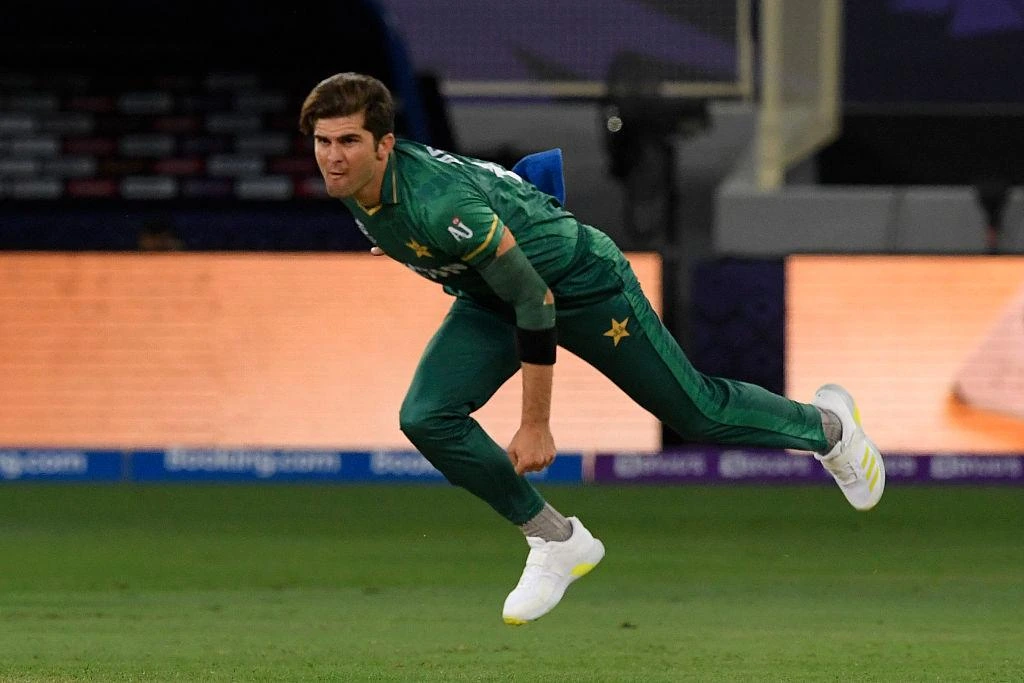
Pakistan’s defence worked because they did not rely only on pace. Abrar Ahmed and Saim Ayub both picked up two wickets, giving Pakistan control through the middle overs. Saim’s all-round value was especially important because he had already contributed with the bat.
The key was not only wickets. Pakistan also made Australia hit into difficult areas. When the chase needed acceleration, batters could not consistently find clean boundaries. Dot balls increased pressure. Risky shots followed. Wickets came from that squeeze.
Shaheen Afridi and Salman Mirza handled pace duties, while Abrar and Saim shaped the middle phase. That mix gave Pakistan enough options to defend a total that was good but not unreachable.
Key Stats From the Match
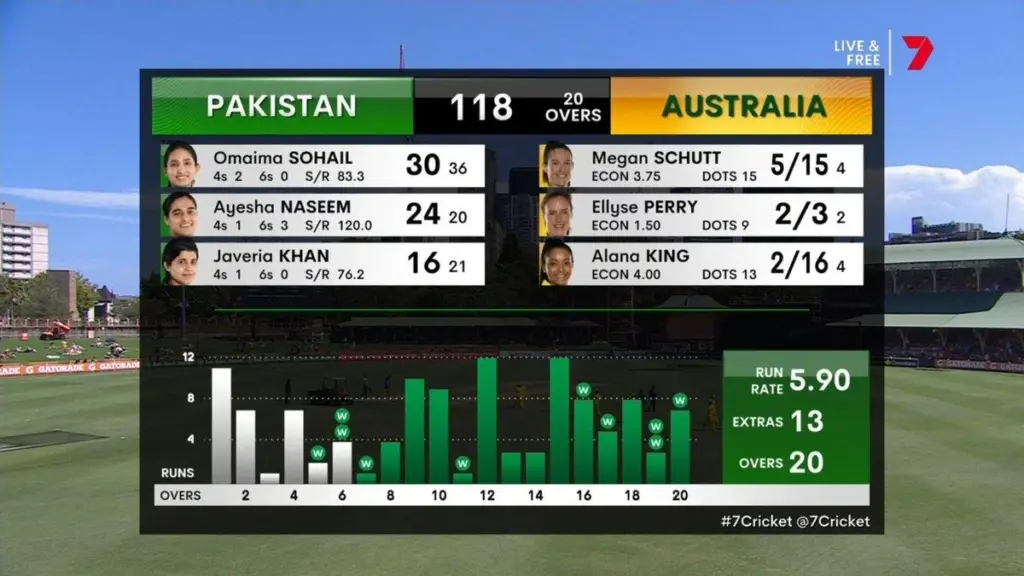
The Pakistan national cricket team vs Australian men’s cricket team match scorecard had several numbers that explained why Pakistan won.
| Stat | Detail |
| Match | Pakistan vs Australia, 1st T20I |
| Venue | Gaddafi Stadium, Lahore |
| Pakistan score | 168/8 in 20 overs |
| Australia score | 146/8 in 20 overs |
| Result | Pakistan won by 22 runs |
| Pakistan lead | 1-0 in three-match series |
| Top Pakistan impact | Saim Ayub 40 and two wickets |
| Best Australia bowling | Adam Zampa four wickets |
| Late Australia resistance | Xavier Bartlett 34 off 25 |
These numbers show a balanced contest rather than a one-sided collapse. Australia had a bowler who controlled the first innings. Pakistan had a batting all-rounder who shaped both halves of the game. The difference came in execution during the chase.
Team Lineups and What They Revealed
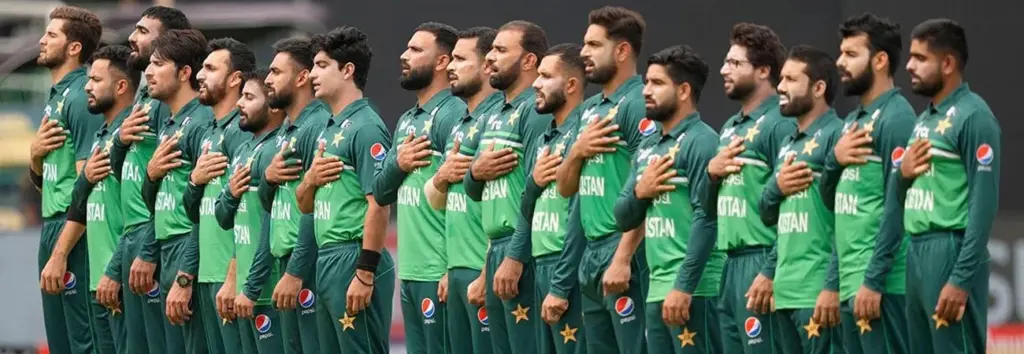
Australia’s playing XI had a newer look. The side included Travis Head as captain, Matthew Short, Cameron Green, Matt Renshaw, Cooper Connolly, Mitchell Owen, Josh Philippe, Jack Edwards, Xavier Bartlett, Adam Zampa and Mahli Beardman.
Pakistan played Sahibzada Farhan, Saim Ayub, Babar Azam, Salman Agha, Fakhar Zaman, Usman Khan, Shadab Khan, Mohammad Nawaz, Shaheen Afridi, Salman Mirza and Abrar Ahmed.
The team sheets explained some of the match rhythm. Australia were without several familiar T20 names, including Pat Cummins, Josh Hazlewood, Tim David, Nathan Ellis and Glenn Maxwell. That did not make them weak, but it did leave them with a less settled finishing structure.
Pakistan, meanwhile, had a more natural home-condition balance: top-order stroke play, spin options, left-arm pace, and enough middle-order experience to defend a medium-high total.
Match Timeline: How Pakistan Took Control

The match turned in stages rather than one sudden moment. Pakistan’s first important phase came through Saim Ayub’s scoring rate. His early runs made sure the innings did not get stuck.
Australia responded through Adam Zampa. His spell stopped Pakistan from turning 168 into something much bigger. At the halfway point, Australia would have felt the target was chaseable.
The second innings changed that reading. Pakistan’s bowlers struck often enough to stop Australia from building. Every time Australia needed a calm 30-run partnership, a wicket or quiet over interrupted them.
By the final overs, Australia needed too much from the lower order. Bartlett fought, but Pakistan had already won the tactical battle.
What the Result Means for the Series
Pakistan’s 22-run win gave them a 1-0 lead and immediate confidence in the series. More importantly, it showed that their bowling group could defend a total under pressure against a powerful Australian lineup.
For Australia, the result was not a disaster, but it highlighted clear issues. The bowlers did enough to keep the match within reach. The batters could not turn that opportunity into a winning chase.
The next match becomes about adjustment. Australia need a cleaner powerplay, better middle-over rotation and one batter to bat deep. Pakistan need to avoid relying too heavily on small contributions and should aim for a stronger finish with the bat.
Practical Takeaway From the Scorecard

The scorecard says Pakistan won by 22 runs, but the deeper lesson is about control. Pakistan were not perfect, yet they adapted better to the conditions. Their bowlers understood that 168 could be enough if they denied Australia easy boundaries.
Australia lost because their chase lacked one anchor innings. A target of 169 usually needs one batter to make 60-plus or two batters to share a strong stand. That did not happen.For readers checking the australian men’s cricket team vs Pakistan national cricket team match scorecard, the headline is clear: Pakistan made 168/8, Australia reached only 146/8, and Saim Ayub’s all-round role was the difference in a 22-run win.